Tag Archives: Computational Biology

Using SimurgArray, and the bird behind the name
By | September 30, 2026

Part 5 of 5. Four posts of reasons are enough. This one is about what it looks like when you actually use the thing, and about the name, which people ask about more often than they ask about normalization. Fair enough. One small note first. The command examples below use the usual command line options,… Read More: Using SimurgArray, and the bird behind the name »

SimurgArray: What good could it do?

By | September 30, 2026

Part 3 of 5. “Benefit to humanity” is a big phrase for a tool that mostly reads binary files. I will try to keep this post the right size. SimurgArray will not cure anything. What it can do is lower a few barriers that currently decide who gets to do genetics research and how much… Read More: SimurgArray: What good could it do? »

Are there SimurgArray alternatives? Yes. Why build it anyway?

By | September 30, 2026

Part 2 of 5. Whenever someone tells me they are writing their own genotype caller, my first instinct is to ask whether they have looked around. So it is only fair that I answer the same question about myself. I did look around. There is a lot of good work out there. Some of it… Read More: Are there SimurgArray alternatives? Yes. Why build it anyway? »

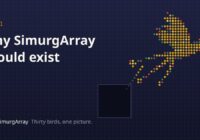
Why SimurgArray should exist?

By | September 30, 2026

Part 1 of 5. Every genotyping array tells a small story before it tells you anything about DNA. A glass slide goes into a scanner, the scanner writes two IDAT files per sample (one red, one green), and a few hundred thousand bead intensities wait for someone to turn them into genotypes. That someone is… Read More: Why SimurgArray should exist? »

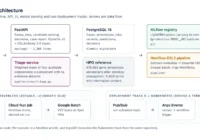
rarelens: building a rare-disease variant triage platform, and the four things I got wrong

By | September 12, 2026

An end-to-end rare-disease variant triage platform: a Nextflow pipeline, three execution backends behind one API call, Terraform for two cloud tracks, and a phenotype-driven ranking measured against 10,178 published cases. Including the model metric that collapsed to exactly random once I removed the feature doing all the work.

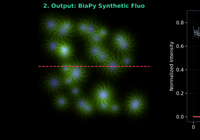
Beyond the 2D Bounding Box: Why Bioimage Deep Learning Is a Completely Different Beast and How BiaPy Tames It

By | August 24, 2026

https://github.com/lynchaos/biapy-hub https://lynchaos-biapy-hub-app-hlcmfj.streamlit.app/ If you have spent your machine learning career optimizing ResNets or YOLO on ImageNet and COCO, here is an inconvenient truth: standard computer vision has spoiled you. In standard computer vision, a batch is usually an RGB triplet where . The pixels are isotropic, the spatial coordinates are Euclidean, the lighting is roughly… Read More: Beyond the 2D Bounding Box: Why Bioimage Deep Learning Is… »

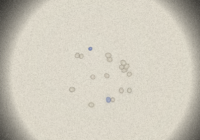
Building a fake microscope: simulating a yeast wet mount

By | August 1, 2026

Repository: github.com/lynchaos/generative-microscopy Why this sketch I wanted to find out whether I could make something that genuinely looked like microscopy footage. Not cells bouncing around a canvas, but Saccharomyces cerevisiae behaving the way it actually behaves under a coverslip, seen through real glass and real light. The sketch began life as a generic n-body attraction… Read More: Building a fake microscope: simulating a yeast wet mount »

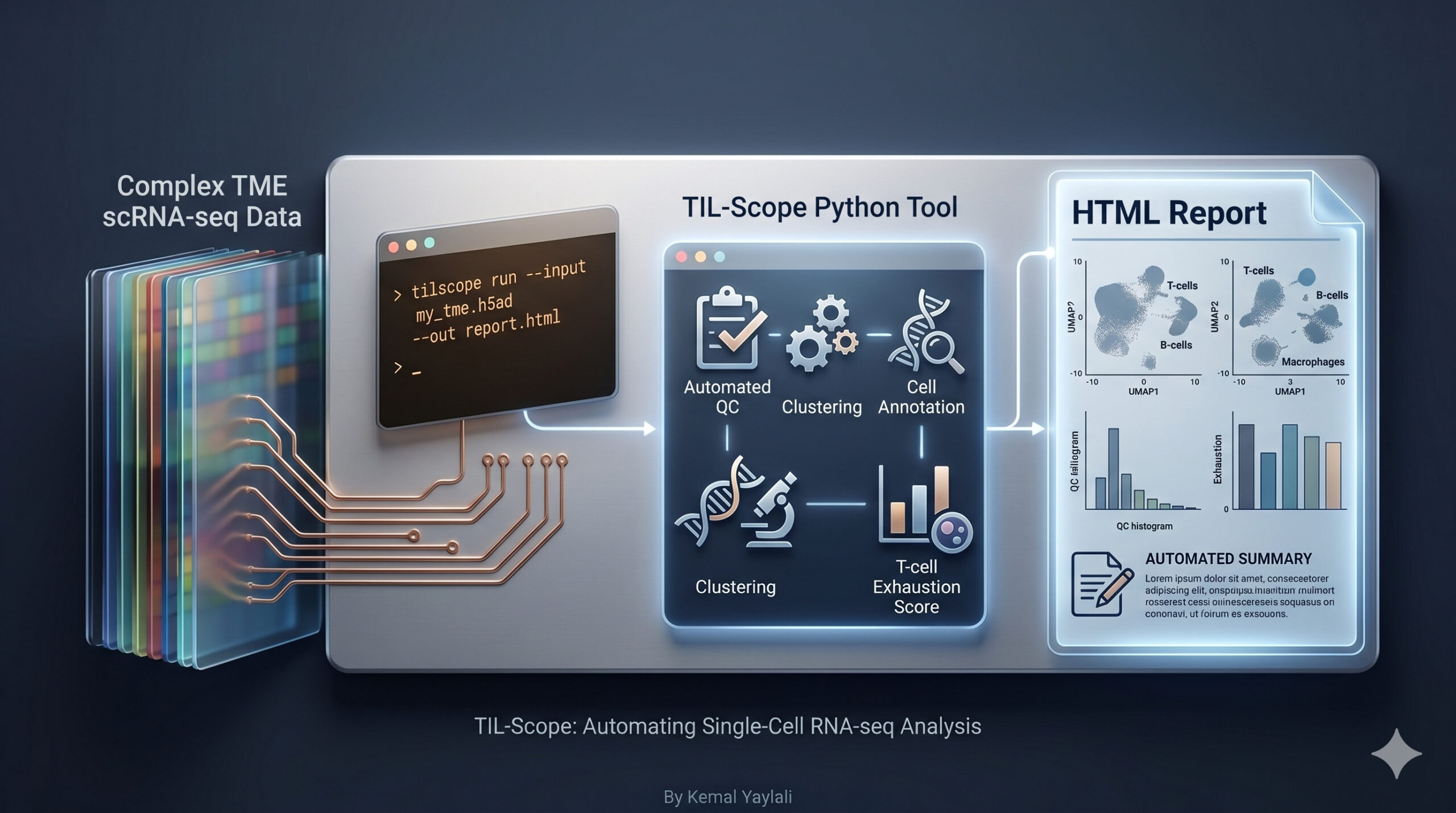
I Built a Single-Cell RNA-seq Pipeline That Writes Its Own Report

By | June 7, 2026

Single-cell RNA sequencing is one of those techniques that generates a huge amount of data and then demands a huge amount of effort to interpret it. You run the sequencer, get a matrix of 20,000 genes by several thousand cells, and then spend the next several days (or weeks) figuring out what’s in there. I… Read More: I Built a Single-Cell RNA-seq Pipeline That Writes Its Own… »

From Lab Bench to Browser: A Hybrid Digital Twin for CHO Cell Culture

By | May 30, 2026

I rebuilt two published CHO cell-culture papers — a hybrid ODE + machine-learning growth model, and a genome-scale metabolic reduction pipeline — as an interactive digital twin that runs in the browser. Here’s how it works, what’s under the hood, and an honest take on what it’s good for. No hosted version yet; the code is on GitHub and a live instance is coming soon.

How I Built a Machine Learning Tool to Predict Drug Manufacturing Failures

By | January 25, 2026

A bioprocess engineer’s journey into machine learning and why the pharmaceutical industry desperately needs this bridge When I tell people I work in bioprocess engineering, I usually get blank stares. When I explain that I help manufacture proteins in giant tanks for therapeutic use, the response is often: “Oh, like brewing beer?” Not quite. But… Read More: How I Built a Machine Learning Tool to Predict Drug… »