CellSeg v0.1.0 is out
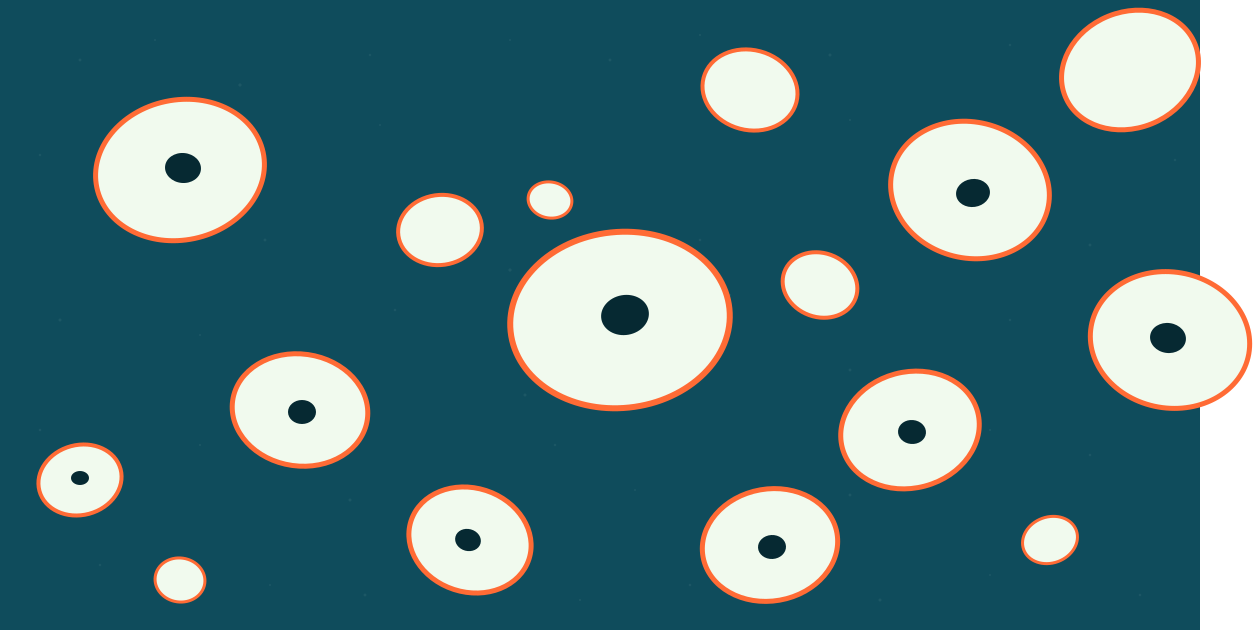
Three months ago I started building an Android app to count cells. Today the first public build is up, and I’d like to introduce it properly. It’s called CellSeg, and it does one stubborn small thing: it lets a bench scientist take a picture of a microscopy sample with their phone and get a cell… Read More: CellSeg v0.1.0 is out »
The Night My Heart Stopped Being Just an Organ
The bench problem that wouldn’t go away
There’s a thing that happens in a tissue culture lab that I’ve never quite gotten used to, even after years of doing it. You pull a sample from a flask or a bioreactor, you load it onto a counting chamber, you put your eye to the microscope, and then you spend the next several minutes… Read More: The bench problem that wouldn’t go away »
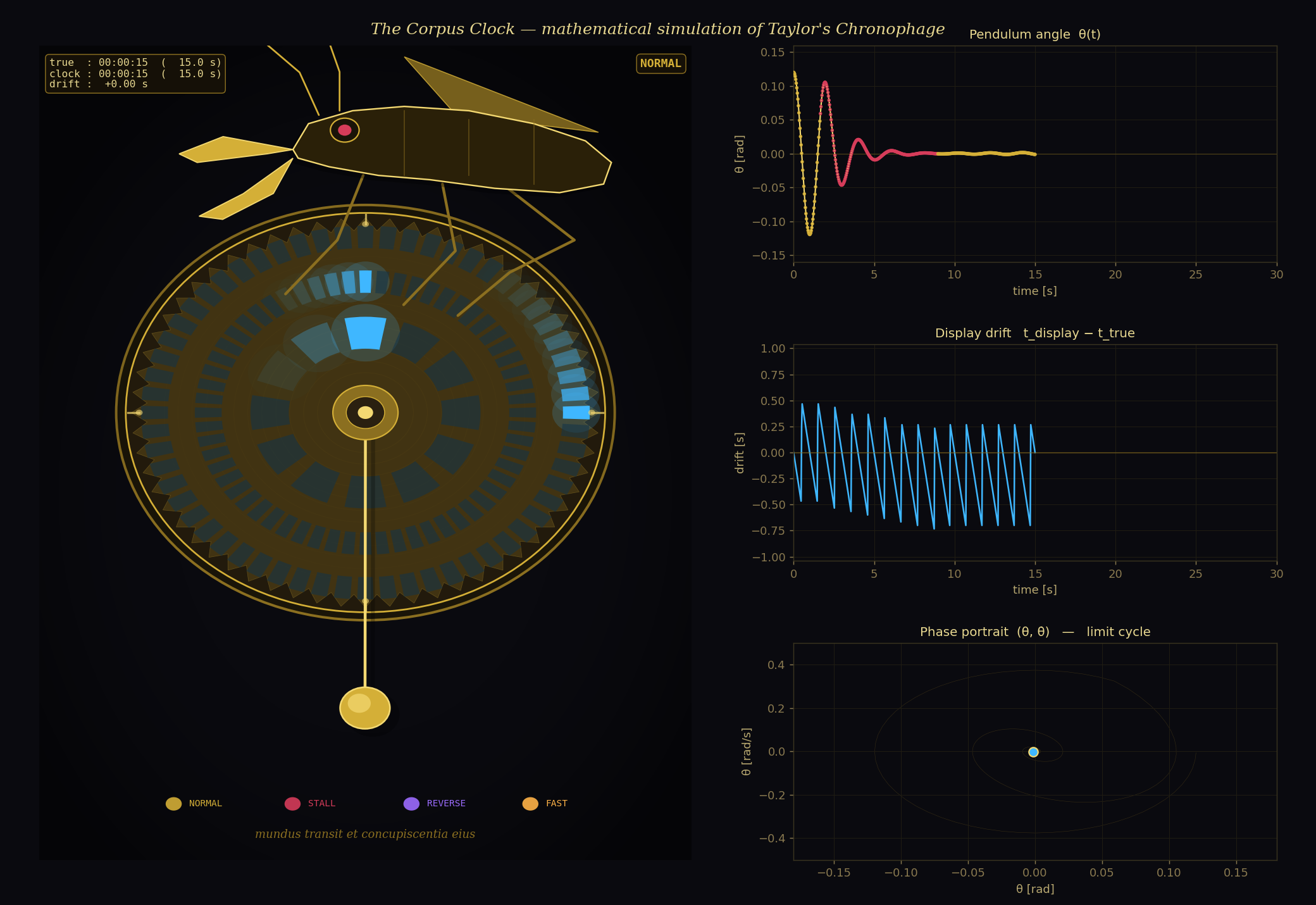
Simulating the Corpus Clock: A Hybrid Dynamical Systems Model of Taylor’s Chronophage
The Corpus Clock sits at the corner of Corpus Christi College, Cambridge. Unveiled in 2008 by Stephen Hawking, it was designed by inventor John C. Taylor as a meditation on time’s relentless consumption of life. A giant golden insectoid sculpture — the Chronophage (from the Greek chronos, time, and ephagon, I ate) — crouches atop the clock face, its jaw mechanically… Read More: Simulating the Corpus Clock: A Hybrid Dynamical Systems Model of… »
Running a 5-Litre Lysine Fermentation From Scratch. Everything Nobody Tells You
If you’ve ever read a paper on lysine production with Corynebacterium glutamicum and thought “right, but what do I actually do on Monday morning when I’m standing in front of the bioreactor” — this post is for you. I’m going to walk through the entire process of setting up and running a 5L bench-scale fed-batch… Read More: Running a 5-Litre Lysine Fermentation From Scratch. Everything Nobody Tells… »
Why I Stopped Trusting My Gut (and Started Trusting My Models) — AI in Lysine Fermentation
Look, I’ll be honest. For years I ran bioreactors the way most of us do: set your temperature, set your pH, watch the DO trace, take a sample every few hours, and hope for the best. You tweak the feed rate because “it feels right.” You crank up the stirrer because the DO is dropping.… Read More: Why I Stopped Trusting My Gut (and Started Trusting My… »
Building ML Tools Scientists Will Actually Use
The Gap Between Models and Tools I’ve seen a lot of impressive ML models in biopharma that never get used. Not because the science is wrong, but because the tool doesn’t fit into anyone’s workflow. The model might be published in Nature Methods with beautiful receiver operating characteristic curves, but if a discovery scientist can’t… Read More: Building ML Tools Scientists Will Actually Use »
What Makes an Antibody Hard to Manufacture? Data-Driven Insights
The Features That Matter After training the developability model on 100+ therapeutic antibodies, I looked at the feature importance rankings. The model had learned to weight certain properties more heavily than others when making predictions. Some of these were obvious. Some were surprising. All of them tell us something about what actually makes antibodies difficult… Read More: What Makes an Antibody Hard to Manufacture? Data-Driven Insights »
Case Study: Predicting Trastuzumab Developability
Why Trastuzumab Is the Perfect Test Case When I built my antibody developability predictor, I knew I needed to validate it against a molecule where we actually know the manufacturing story. Trastuzumab (Herceptin) was the obvious choice. It’s one of the most successful therapeutic antibodies ever made, with decades of manufacturing data behind it. More… Read More: Case Study: Predicting Trastuzumab Developability »